
Why Commercial Print Costs Balloon Inside Modern Businesses
For SMEs, corporate enterprises, and high-growth startups, printing and copying expenditures often represent a silent, unmonitored leak in operational budgets. Between office laser toner cartridges, frequent short-run stationery reprints, and costly rush deliveries for trade exhibitions, businesses routinely spend 35% to 60% more on print collateral than commercially necessary.
Fortunately, slashing your business printing and copying overhead does not require downgrading to flimsy paper or printing washed-out black-and-white marketing materials. By implementing systemic pre-press controls, switching from desktop copiers to commercial gang-run printing, and standardizing corporate paper stocks, your company can maintain premium tactile brand standards while permanently reducing overall print expenditures.
1. Stop Relying on Desktop Laser Printers for Marketing Collateral
The single most expensive mistake small businesses make is running brochures, flyers, employee handbooks, and client proposals on in-house color laser printers or multifunctional office copiers. While desktop printers offer immediate convenience, their per-unit economics are punishing:
| Cost & Performance Metric | In-House Office Laser Printer | Commercial Digital Press (Printix Digital) |
|---|---|---|
| Average Cost Per Color A4 Page | ₹4.50 – ₹8.00 (Toner + Drum wear) | ₹1.10 – ₹2.20 / sheet in volume |
| Maximum Paper Weight Supported | 120 – 160 GSM (Prone to roller jams) | 300 – 350 GSM Heavyweight Art Board |
| Edge Quality & Bleed | White 5mm unprinted borders on all edges | Full edge-to-edge full bleed guillotine cut |
| Lamination & Protection | None (Toner cracks when folded) | Thermal Velvet Matte, Gloss, or Spot UV |
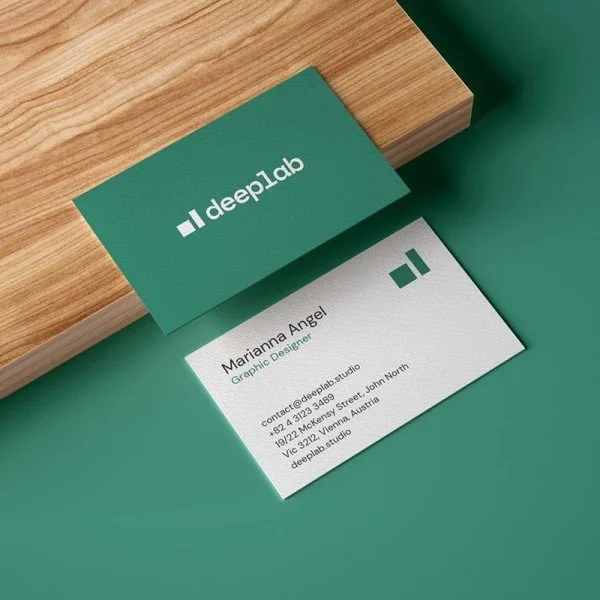
Action Step: Restrict in-office copiers to internal draft paperwork and black-and-white contracts. Consolidate all external-facing materials—including Business Cards, brochures, packaging stickers, and letterheads—through a dedicated online commercial printing partner.
2. Leverage Gang-Run Printing & Smart Batching
Commercial digital and offset presses run on massive mother sheets (such as 12" × 18" or 13" × 19"). When you place a small, isolated print order for 100 cards every month, a press has to be calibrated specifically for your run. However, when orders are "ganged" alongside complementary jobs on a single sheet, the machine setup overhead drops exponentially.
You can capture these exact economies of scale by standardizing company-wide ordering cycles:
- Batch Employee Onboarding: Instead of ordering 100 visiting cards whenever a new employee joins, batch your requests at the end of the month or quarter. Printing 1,000 cards across 5 employee profiles costs up to 45% less than 5 separate 200-card transactions.
- Standardize Paper Substrates: Use the same 300 GSM art board for your business cards, table tent cards, and product swing tags so they can be grouped on identical sheet stock.
3. Choose the Right Paper GSM (Stop Overpaying for Unnecessary Bulk)
Paper weight (measured in Grams per Square Meter, or GSM) directly impacts material costs. Many businesses mistakenly order the heaviest possible stock for items that don't require it:
- Letterheads & Office Invoices: 100–120 GSM Bond / Alabaster paper is ideal. It feeds smoothly through office copiers without costly jams and feels distinctly more premium than standard 70 GSM photocopy paper.
- Event Flyers & Handouts: 130–170 GSM Gloss or Matte Art Paper delivers vibrant CMYK color saturation without the higher price tag of rigid cardstock.
- Corporate Business Cards: 300–350 GSM remains the sweet spot. It provides authoritative rigidity without requiring ultra-expensive multi-ply duplex lamination.
4. Eliminate Expensive Reprint Errors with Pre-Press Hygiene
A staggering 20% of corporate print budgets are lost to reprints triggered by low-resolution logos, RGB color shifts, or missing bleed margins. Implementing a standard pre-flight checklist prevents expensive scrap waste:
- Always Design in CMYK: Never submit artwork formatted in RGB. Office screens display RGB with vibrant backlighting, but physical ink cannot replicate neon RGB greens or electric blues without expensive spot Pantone inks. Converting to CMYK before sign-off prevents costly color disappointment.
- Enforce a 3mm Bleed & Safety Zone: High-speed hydraulic cutters experience a microscopic tolerance shift (±1mm). Keeping all vital typography at least 4mm inside the trim line guarantees zero cropped phone numbers or sliced logos.
- Convert Fonts to Vector Outlines (Curves): Missing fonts automatically revert to generic Arial or Courier during RIP processing. Outlining text in Illustrator or exporting to PDF/X-1a ensures typography remains flawless.
5. Partner with a Transparent Wholesale Online Printer
Traditional local print brokers often add 30% to 50% middleman markups while lacking digital file verification tools. At Printix Digital, we cut out intermediaries by operating our own digital presses, Roland contour cutters, and thermal laminators in Lucknow, delivering directly to commercial businesses across India.
Ready to audit your commercial print budget? Explore our full catalog of Commercial Print Products or request a custom corporate B2B contract discount today.